EngFlow x Uber Amsterdam Build Meetup 2026: Scaling Builds
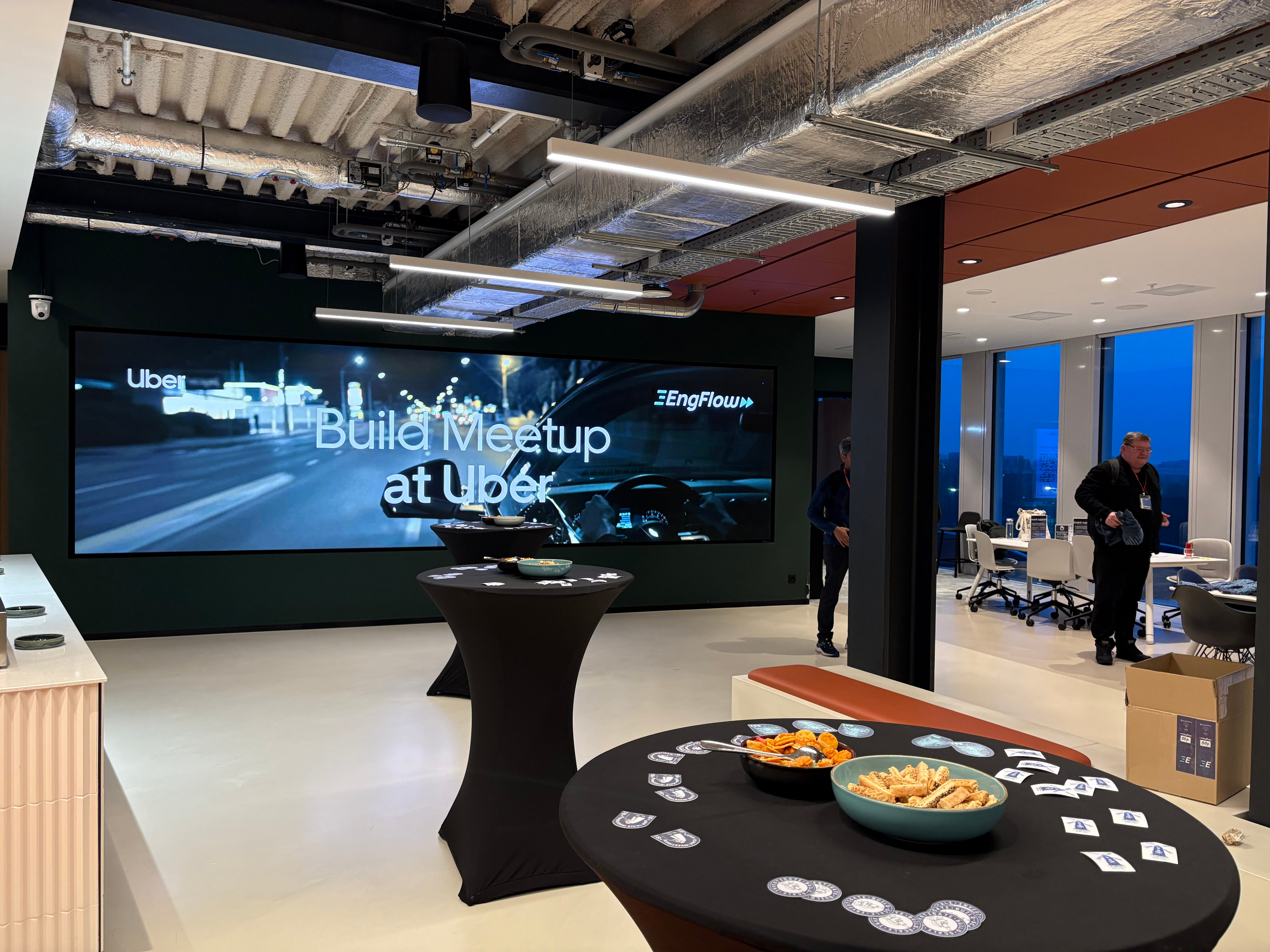
The Build. Scale. Investigate. World Tour has officially begun! Uber and EngFlow co-hosted the February 2026 Build Meetup at Uber’s buzzing Amsterdam office. The event brought together developers and build specialists who shared "war stories" from the build community.
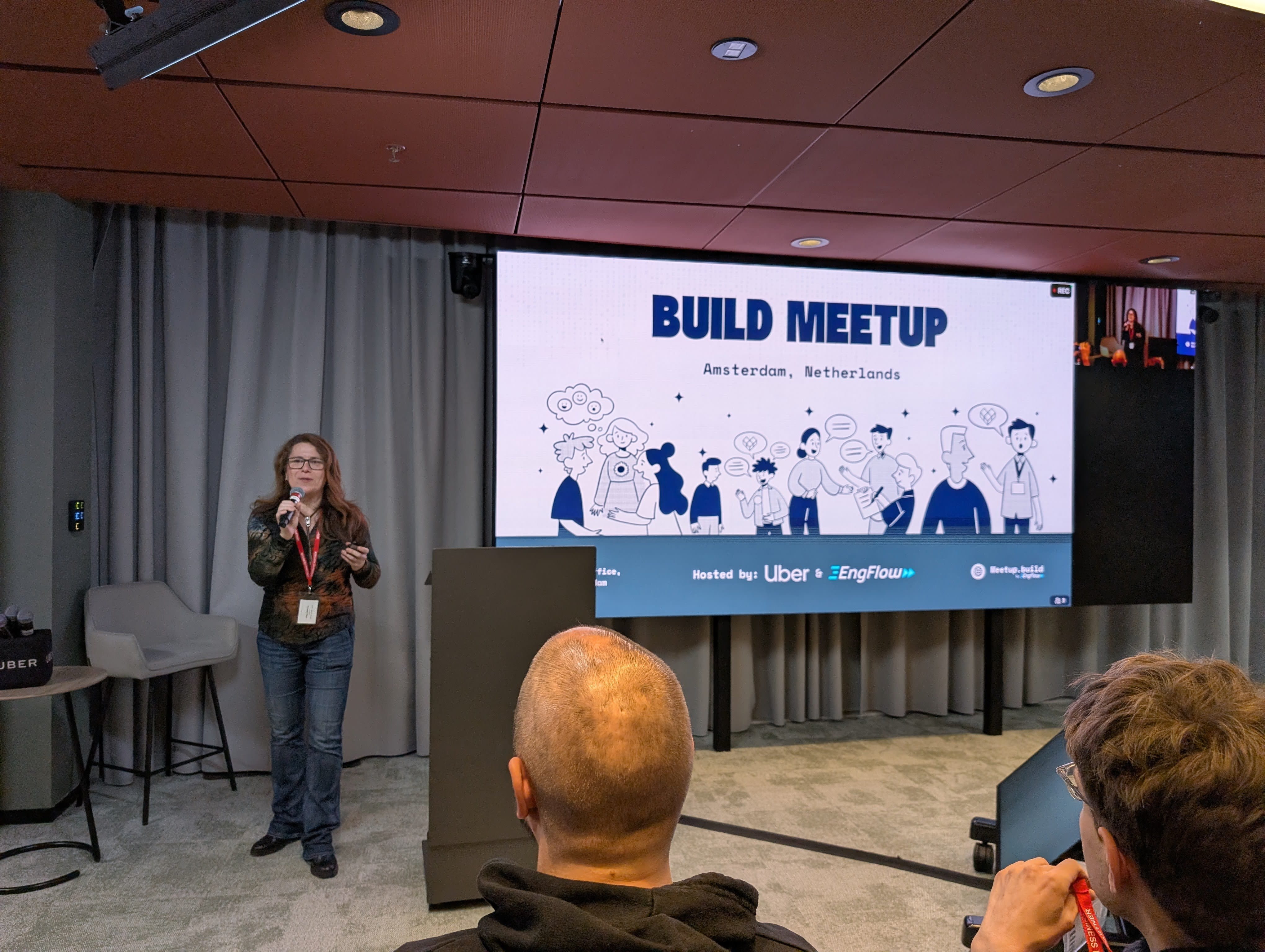
EngFlow CEO and Co-founder Helen Altshuler kicked off the event by welcoming the Amsterdam community and introducing the speakers. The agenda was packed with talks about monorepo development, remote caching, and the evolving ecosystem of modern build tools.
Bonanza: A Distributed Build System
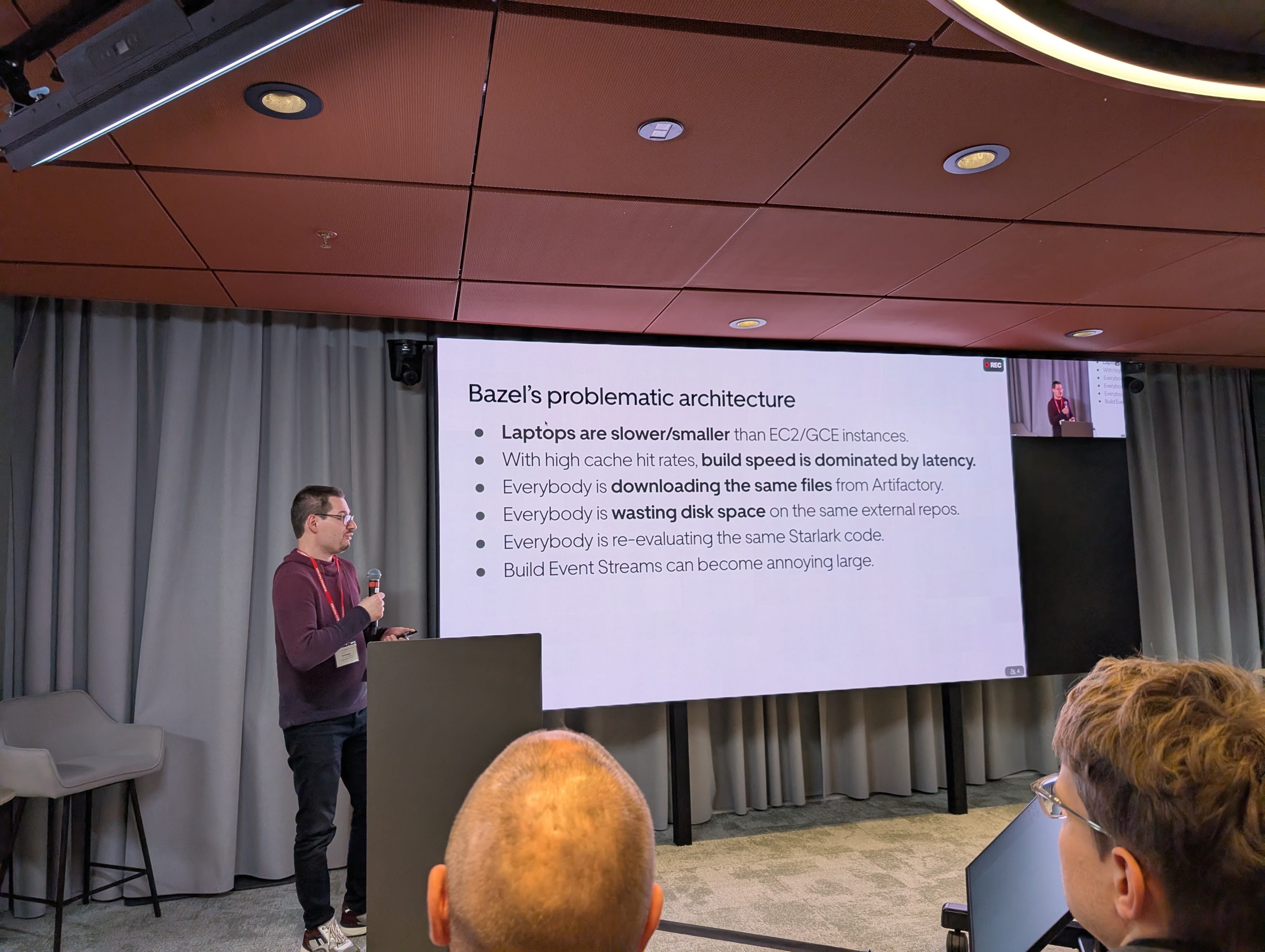
Buildbarn creator Ed Schouten provided an update on his experimental cloud build system, Bonanza. Bonanza tackles "Bazel’s problematic architecture", the reality that local laptops are essentially smaller, slower versions of cloud instances.
Ed shared that Bonanza now has sufficient Bazel compatibility to build Buildbarn itself.
- Cloud-first approach: Bonanza proposes shifting as much work as possible to the cloud, leaving only thin clients on the local build machines.
- Security & trust: The system emphasizes encryption, allowing teams to outsource significant parts of the infrastructure to arbitrary third-party services without requiring high levels of trust.
- Unified caching: Unlike Bazel’s multiple caching layers, Bonanza aims to consolidate everything into a single, unified remote caching mechanism.
While compatibility has increased, Bonanza currently lacks incrementality, which Ed noted as his next major project focus.
Into the Python-verse: Supporting Multiple Python Versions in a Bazel Monorepo
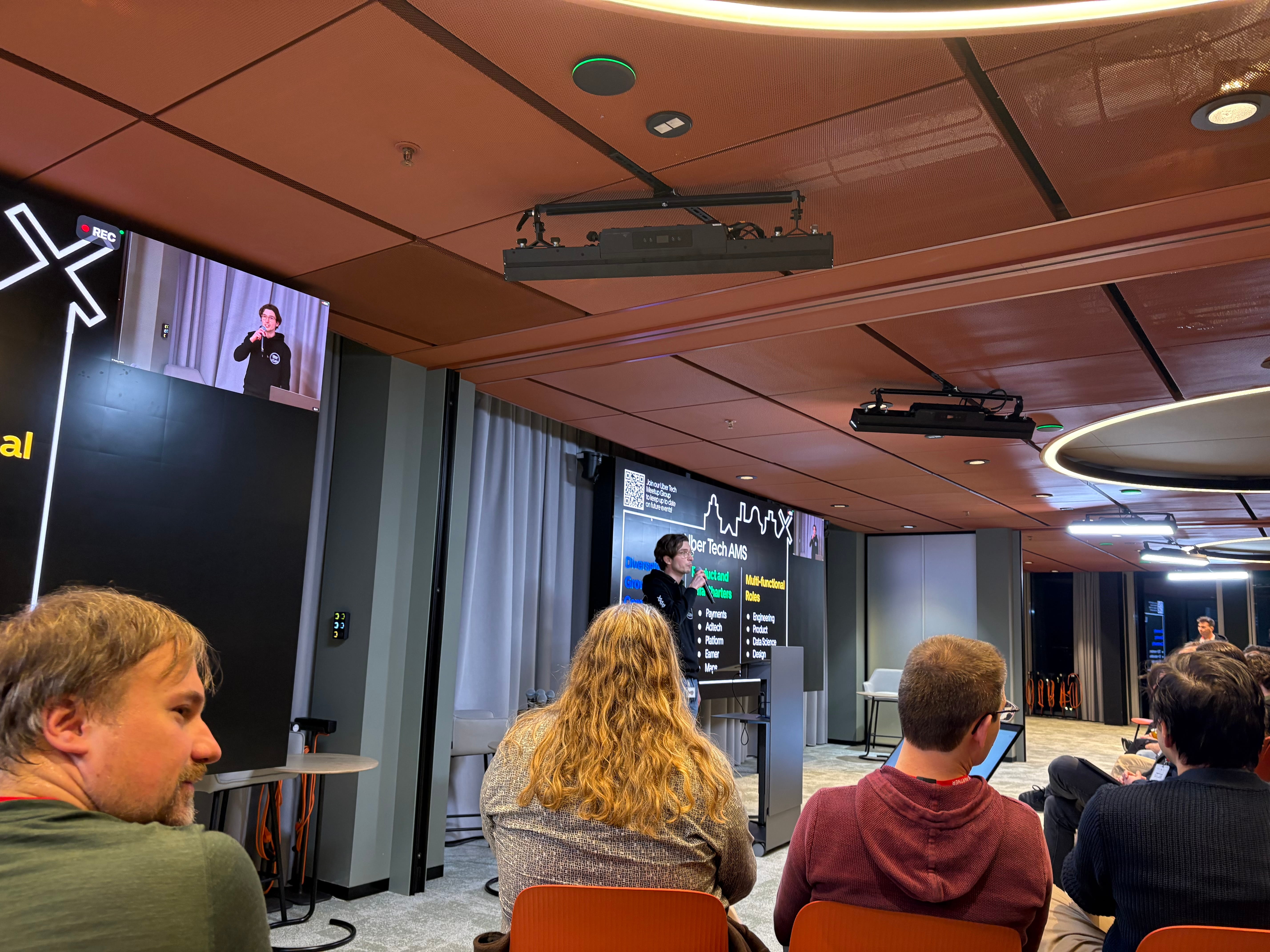
Alex Preobrazhenskiy and the Uber engineering team gave us a tour of their “Python-verse”, sharing how they tackle one of the most persistent challenges in large-scale development: dependency hell across a massive monorepo. As projects evolve, different teams often require different Python versions, making a single global environment impossible.
Further, when projects reach Uber’s scale, a single centralized cache can become a massive bottleneck. Their solution? A novel hybrid peer-to-peer (P2P) cache distribution mechanism to increase efficiency and maintain build isolation while allowing for massive concurrency. The peer-to-peer distribution also increases efficiency on very large-scale builds where a single remote cache would typically struggle to keep up with demand.
The talk also deep-dived into their RBE architecture, showing how they maintain build isolation while supporting concurrency.
Mastering the "Many Caches" of Bazel
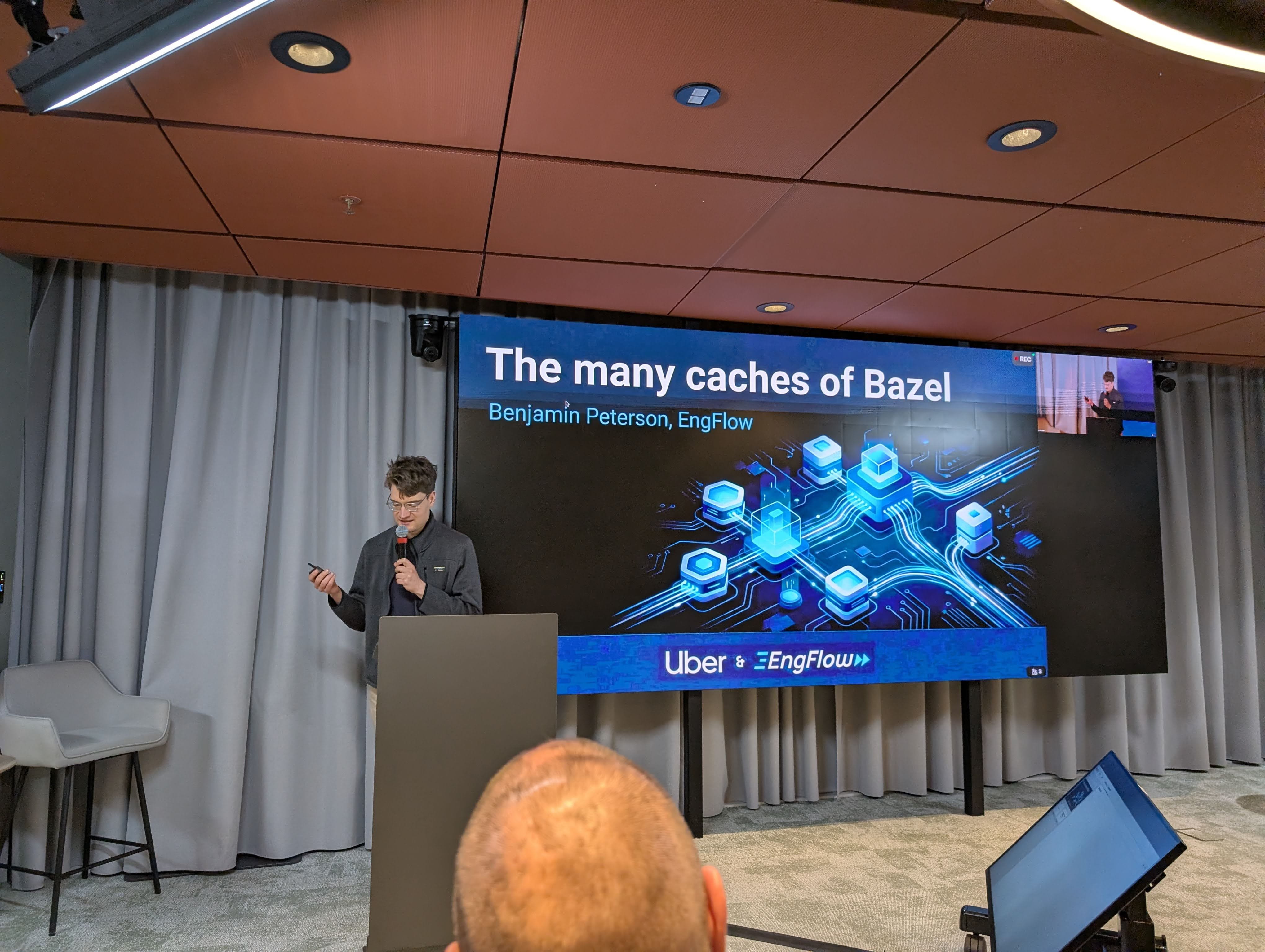
Benjamin Peterson from EngFlow walked the audience through Bazel’s sophisticated, multi-tiered caching architecture. Describing the role of each cache, Benjamin demonstrated how Bazel ensures that nothing is rebuilt or re-downloaded unnecessarily.
Updated from the original, Benjamin’s talk broke down different caching mechanisms:
- Action cache: How Bazel remembers the results of previous commands to skip redundant work.
- Content-Addressable Storage (CAS): The underlying mechanism for storing and retrieving files based on their cryptographic hashes.
- Remote vs. local layers: The distinction between caching on a developer's machine and sharing a centralized cache across an entire organization.
- Repository cache: Strategies to avoid repeated downloads of repository rules.
Isolated Builds and Workspaces for Designers
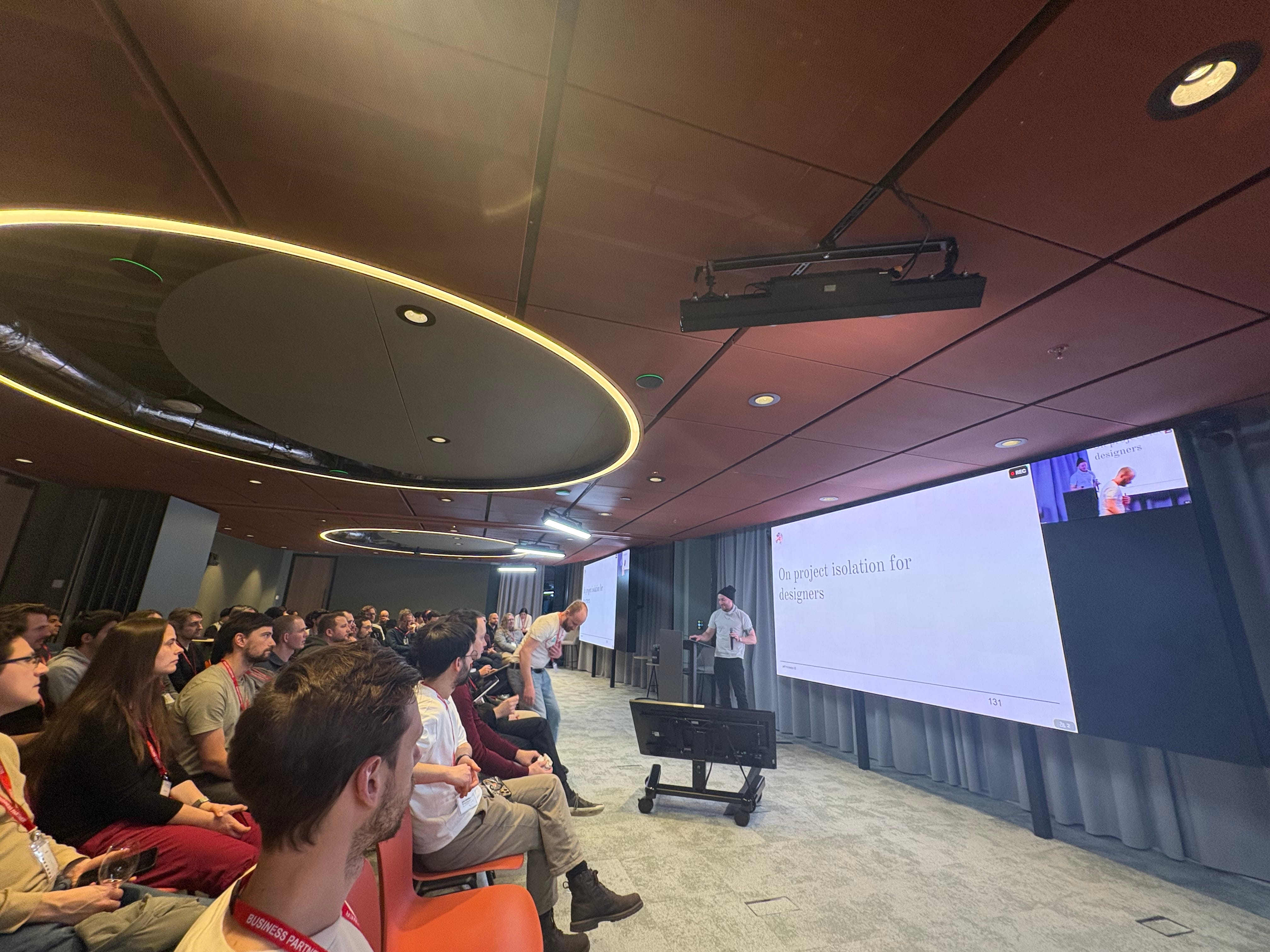
Highlighting the overlapping needs of developers and designers, Vince Hodsdon shared a unique perspective on how build hermeticity benefits more than just compilers. He presented the argument that hermeticity isn't just for engineers while they're sharing space with designers in a Bazel monorepo-based project.
- Empowering designers: Vince demonstrated that Bazel’s ability to isolate individual app components allows designers to participate directly in the development process without needing to set up a massive, fragile development environment.
- Live demo: The presentation concluded with an impressive demo showing an iOS project's view components and isolating them into their own SwiftUI environments for designer experience.
Lightning Talks
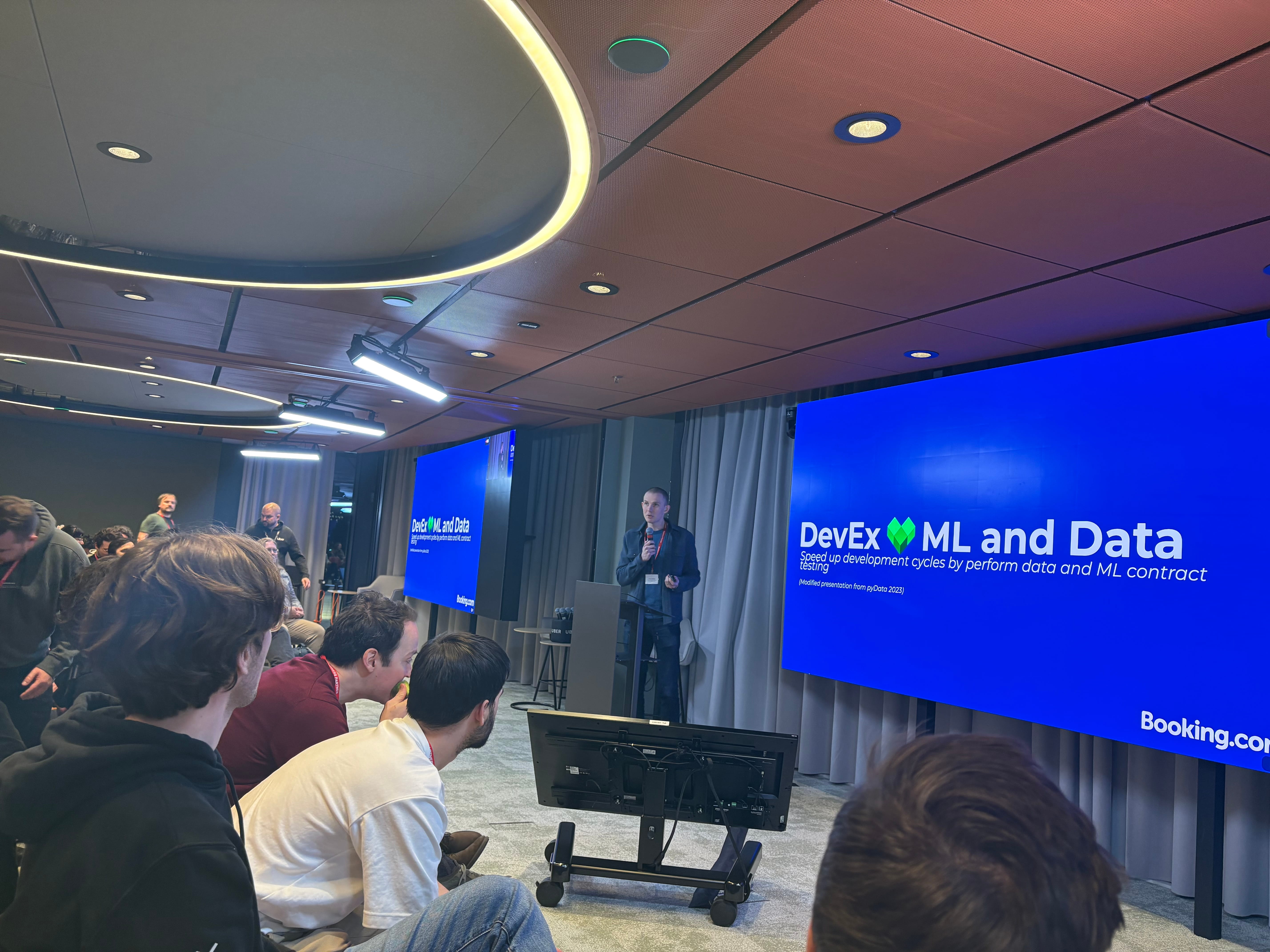
Data & ML Contract Testing: Jeroen Schmidt from Booking.com shared how his team is leveraging Bazel beyond traditional software engineering, specifically by applying it to the world of Data Science and Machine Learning (ML). Jeroen explained how the team uses Bazel to reduce ML feedback loops from over an hour to under 10 minutes by validating code/data contracts locally. This prevents the dreaded "ColumnNotFound" exception from crashing a production run 45 minutes in.
Custom Maven Acceleration: Sergey Chernov from Miro shared how the team looked beyond off-the-shelf tools. The Miro team built their own Maven build acceleration from scratch to bypass internal bottlenecks and get faster feedback.
The Future of Build Systems in Amsterdam
The discussions at Uber’s Amsterdam office made one thing clear: the "build problem" is no longer just about compiling code - it is about seamless, secure, and lightning-fast builds at scale. The build community is making impressive progress on all fronts, whether it is with Uber’s innovative approach to peer-to-peer caching, Ed Schouten’s vision for a "thin-client" cloud build with Bonanza, or Miro’s journey in custom Maven acceleration.
Events like these remind us that while our tools (Bazel, Maven, or Buildbarn) may differ, we are all solving the same core challenges: reducing latency, managing complexity, and keeping engineers in flow rather than waiting for progress bars.
Join the World Tour
The Build. Scale. Investigate. World Tour continues! Amsterdam was just the first stop of 2026. We are incredibly grateful to the Uber team for their hospitality and to JetBrains and VirtusLab for joining EngFlow in hosting the evening.
Sign up for our upcoming meetups at meetup.build. Be sure to follow us on LinkedIn to find out when the EngFlow team is heading to a city near you. See you at the next stop!